🎬 Solution Video
🎯 System Architecture
The core of the robotic radiotherapy system is interactive robot technology. This integrated system receives real-time feedback on tumor position changes caused by patient breathing. Based on this feedback, the robot system continuously tracks the dynamic tumor position during motion and automatically delivers each treatment beam with sub-millimeter precision.
The system comprises 3 robots: treatment couch robot, C-arm imaging system, and particle beam treatment robot. Combined with the robot safety system and complex dynamic modeling system, the multi-robot setup performs extensive real-time data exchange. HedraCAM serves as the core programming and simulation software, responsible for scanning and programming control of all 3 robots — the key to safe and efficient radiotherapy.
🔬 Core Function Modules
Offline System — Scene Layout
Based on lightweight triangular mesh technology, supporting import of CAD models from CATIA, UG, SolidWorks and other major platforms. Build the radiotherapy robot surgery platform including treatment head robot (6-axis), treatment couch robot (6-axis), C-arm imaging system, linear slide rails, and all other motion components, enabling multi-robot collaborative layout.
Offline System — Safe Workspace
Construct treatment safety zones through collision detection, defining safety distances between components (50~200mm). Build dedicated head and pelvic safety workspaces for different tumor sites, ensuring zero collision risk between robots, patients, and equipment throughout treatment.
Offline System — Path Planning
Supports both fixed-point and arc treatment modes. Fixed-point treatment selects specific treatment points within the safety zone with timed particle beam switching. Arc treatment provides continuous irradiation along arc segments. Paths use spherical arc transitions for same latitude/longitude points and直角 transitions between different coordinates, optimizing treatment path efficiency.
Offline System — Treatment Plan Storage
After confirming path safety through simulation programming, validated treatment plans are saved as specific format data files for the online control system to execute, ensuring traceability and reproducibility of the treatment process.
Online System — Real-Time Communication
Based on C/S architecture, enabling real-time data transmission between host computer and KUKA robot controller (EthernetKRL module), supporting dual-channel communication for motion control and status monitoring at approximately 20ms frequency, ensuring zero-latency data synchronization during treatment.
Online System — Remote Control
Online control panel integrates treatment plan management, connection status monitoring (white/green/red indicators), treatment operation control, and emergency stop functions. Supports pause/resume/stop treatment modes, ensuring patient safety in emergency situations.
Online System — Synchronized Simulation
Real-time data storage module saves robot Cartesian coordinates, joint angles, and orientation at 20ms frequency. The programming simulation engine drives the virtual model based on real-time position information, allowing doctors to remotely monitor treatment room equipment status from the control room.
HedraCAM Platform — Topological Path Generation
Can repair and integrate complex models into ideal complete models, generating robot paths using topology technology. Supports automatic topological path extraction to produce robot-executable programs, simplifying the programming workflow.
📷 Interface Screenshots
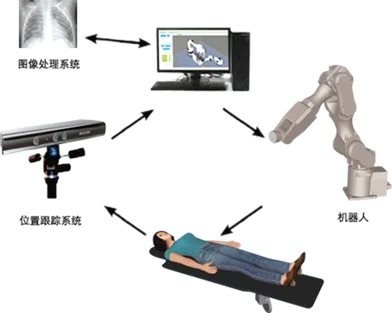
System Schematic

Control Panel
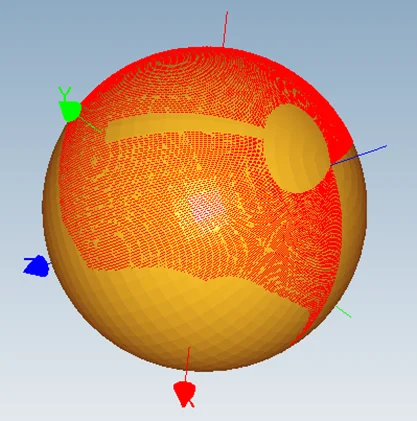
Safety Zone
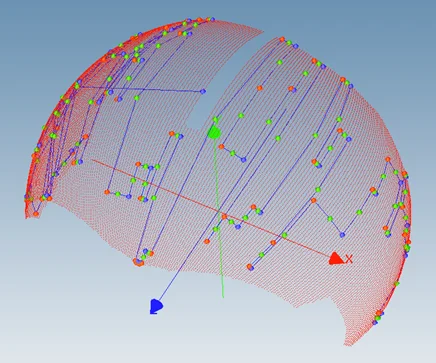
Fixed-Point Trajectory
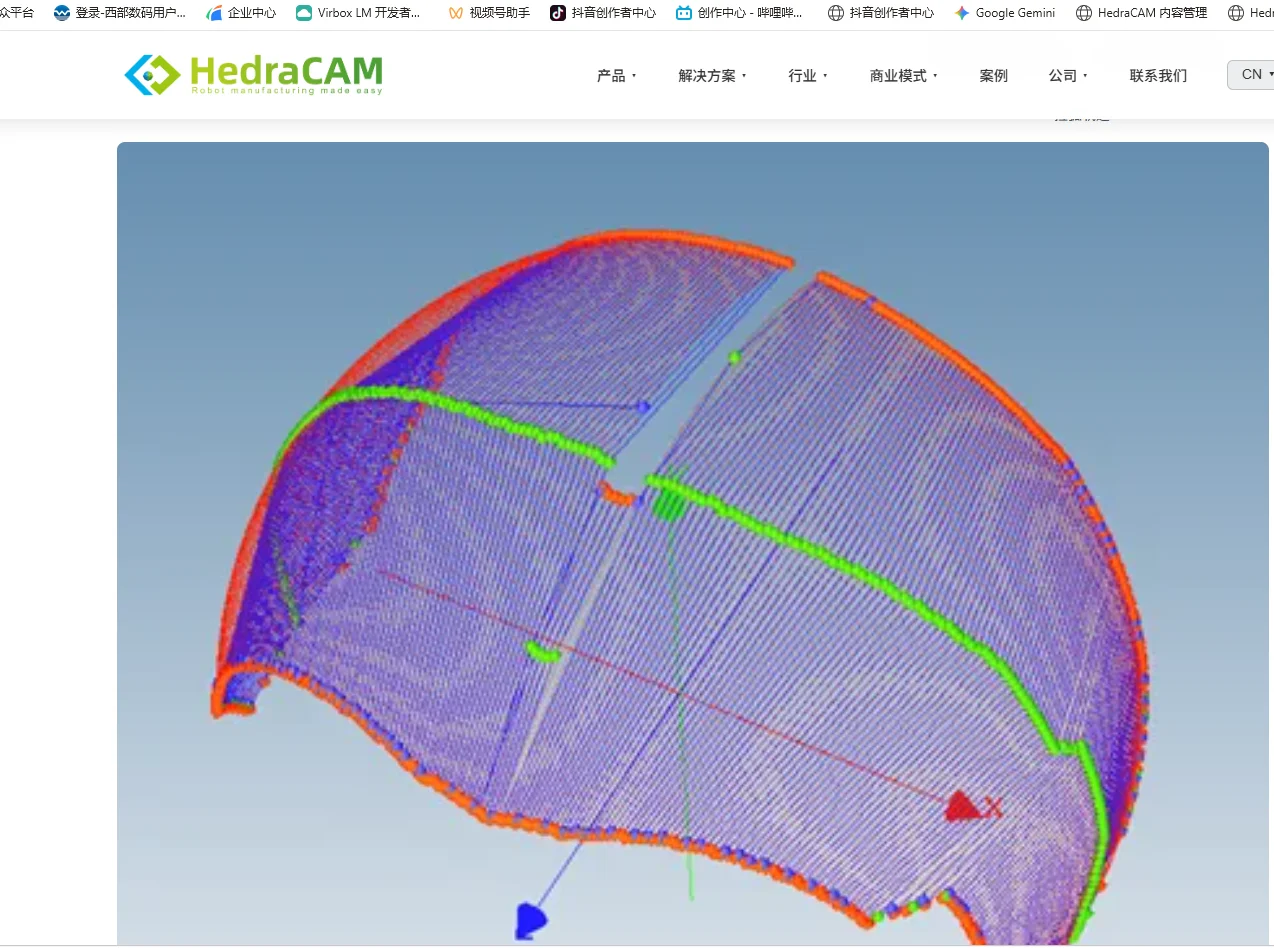
Arc Trajectory
🏥 Applicable Treatment Areas
Head & Neck Tumors
Build dedicated safe workspace for head and neck regions, precisely targeting treatment points. Suitable for radiotherapy of brain tumors, nasopharyngeal cancer, oral cancer, and other head and neck malignancies.
Pelvic Tumors
Construct pelvic safety workspace supporting wide-range treatment point coverage. Suitable for precise radiotherapy of prostate cancer, cervical cancer, rectal cancer, and other pelvic malignancies.
Body Tumors
Offers significant therapeutic advantages for lung, liver, pancreatic, and other body tumors. Respiratory tracking system enables real-time tumor motion tracking with adaptive correction ensuring irradiation accuracy.
Localized Lymph Node Metastases
Suitable for treatment of local recurrence and localized lymph node metastases. Precisely targets metastatic lesions, optimizes dose distribution, and minimizes damage to surrounding healthy tissue.
💡 HedraCAM Platform Advantages
AI No-Teach Programming
Powered by AI IN no-teach programming technology, automatically performs lesion targeting and treatment path generation without manual point-by-point teaching, significantly reducing programming barriers and treatment preparation time.
Digital Twin Remote Control
Virtual model synchronizes with actual equipment in real time. Doctors can remotely monitor the entire treatment process from the control room. Combined with emergency control systems, ensuring patient safety and treatment quality.
Full-Process Closed-Loop Management
From offline scene setup and safety workspace construction to path planning simulation, online communication control, and real-time synchronized monitoring — covering the complete workflow from treatment planning to execution.
Multi-Brand Robot Compatibility
Compatible with KUKA and other mainstream industrial robot brands. SMF platform can be extended to support more robot models, reducing medical equipment integration costs.